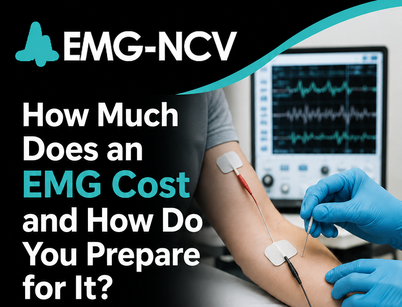
How Much Does an EMG Cost Without Insurance?
How much does an emg cost is a question without a single universal answer, but there are reasonable ranges to work with. For a self-pay patient in Los Angeles, a combined EMG and NCV study typically ranges from $350 to $1,000 depending on how many nerves and muscles are tested, the complexity of the clinical question, and the facility performing the study. A study evaluating one limb for a single suspected condition costs less than a comprehensive bilateral study evaluating multiple potential entrapment sites. The more nerves and muscles included in the protocol, the higher the facility and professional fees. At California Sports and Rehab, self-pay rates are discussed transparently before the appointment, and the team can provide an estimate based on the clinical referral and the testing scope requested.Does Insurance Cover EMG Testing and Under What Conditions?
For most patients, insurance significantly reduces or eliminates out-of-pocket cost. Most major commercial insurance plans, Medicare, Medi-Cal, and workers’ compensation coverage include EMG and NCV testing when ordered by a physician with documented medical necessity. The key requirements are a referring physician’s order, a clinically appropriate diagnosis code supporting the test, and in some cases a prior authorization. Medicare covers EMG and NCV studies under Part B when performed by a physician or qualified practitioner and supported by clinical documentation. Workers’ compensation in California covers electrodiagnostic testing for occupational injuries without a co-pay when the case is accepted. California Sports and Rehab assists patients with insurance verification and prior authorization before scheduling. The team confirms coverage details upfront so there are no unexpected charges after the study is complete.What Factors Change the Total Cost of an EMG Study?
Several variables shift the total cost of an EMG appointment up or down, and understanding them helps patients ask the right questions before booking. The number of limbs tested is the most significant cost driver. A unilateral study covers one arm or one leg. A bilateral study covers both sides, which doubles the number of nerve segments and muscles evaluated. The clinical question determines which is appropriate, not patient preference is. The type of facility also affects cost. A hospital-based EMG lab tends to charge a facility fee on top of the professional fee, which can significantly increase the total bill even when the physician’s charge is comparable. An outpatient specialty clinic like California Sports and Rehab typically has lower facility overhead, which is reflected in more predictable and manageable self-pay rates. The physician’s specialty and training can also influence the professional fee. Board-certified specialists with fellowship training in electrodiagnostic medicine typically charge within a defined range that reflects their expertise.How Should You Prepare for an EMG Test to Get Accurate Results?
Preparation for how to prepare for an EMG test is straightforward but genuinely affects the quality of the data collected. The most important steps are:- Skin temperature: Nerve conduction velocity slows in cold limbs, which can produce falsely abnormal readings. Patients should warm their hands or feet before arriving, particularly in cooler weather. If your limbs feel cold when you arrive, the technician or physician will use warming measures before starting the study.
- Skin preparation: Surface electrodes used in the NCV portion need clean, dry skin with good contact. Showering before the appointment and avoiding lotions, oils, or creams on the arms and legs being tested improves electrode contact and signal quality.
- Medications: Most medications do not need to be stopped before an EMG, but blood thinners should be noted because the EMG needle component involves skin puncture. Inform the clinical team of all medications, including over-the-counter supplements, before the study.
- Clothing: Wear loose, comfortable clothing that allows easy access to the limbs being tested. Shorts are ideal for leg studies. Loose-fitting tops work well for arm and shoulder studies. You may be asked to change into a gown for portions of the evaluation.
What Happens on the Day of Your EMG Appointment?
On arrival, you will complete intake paperwork and review your symptom history with the clinical team. Dr. Tina Hakimian or Dr. Kamran Hakimian will review your referral and any prior imaging or test results before the study begins. The nerve conduction portion comes first. Surface electrodes are placed on your skin, and mild electrical pulses are delivered along the nerve pathway being tested. The sensations are brief and most patients describe them as a quick flick or tap. Multiple nerve segments are evaluated based on your symptom distribution. The EMG portion follows. A thin, sterile electrode is inserted into specific muscles, and the electrical activity is recorded both at rest and during gentle contraction. The needle is very fine and most patients find this portion of the study more tolerable than they anticipated. The entire study typically takes between 30 and 60 minutes. Results are interpreted by the physician during the appointment and communicated to your referring physician promptly. Learn more about carpal tunnel syndrome as one of the conditions commonly evaluated through this testing.Getting Your EMG Done Right at California Sports and Rehab
Cost matters, but the accuracy and clinical value of the study matters more. An inexpensive EMG that produces misleading results costs far more in the long run than a properly performed study from a trained specialist. At California Sports and Rehab, Dr. Tina Hakimian and Dr. Kamran Hakimian ensure that every study reflects real-time physician judgment, not a technician’s protocol. Visit emg-ncv.com for full details on our services, read more about the clinical team, and book your appointment through the contact page. Call 310-652-6060 to speak with the team directly. We are at 12301 Wilshire Blvd Suite 207, Los Angeles, CA 90025.Frequently Asked Questions
Most combined EMG and NCV studies take between 30 and 60 minutes, depending on how many nerves and muscles are included in the testing protocol.
Most medications do not need to be stopped. Inform the clinical team of all medications you are taking, particularly blood thinners, before the study begins.
The needle electrode used in the EMG portion is very fine, similar to an acupuncture needle. Most patients describe mild, brief discomfort at insertion, which resolves quickly as the electrode is repositioned.
Yes. There is no sedation involved in an EMG study, and most patients drive themselves to and from the appointment without difficulty.
The physician interprets the findings during the appointment. A written report is typically sent to the referring physician within a short turnaround, often within a few business days.